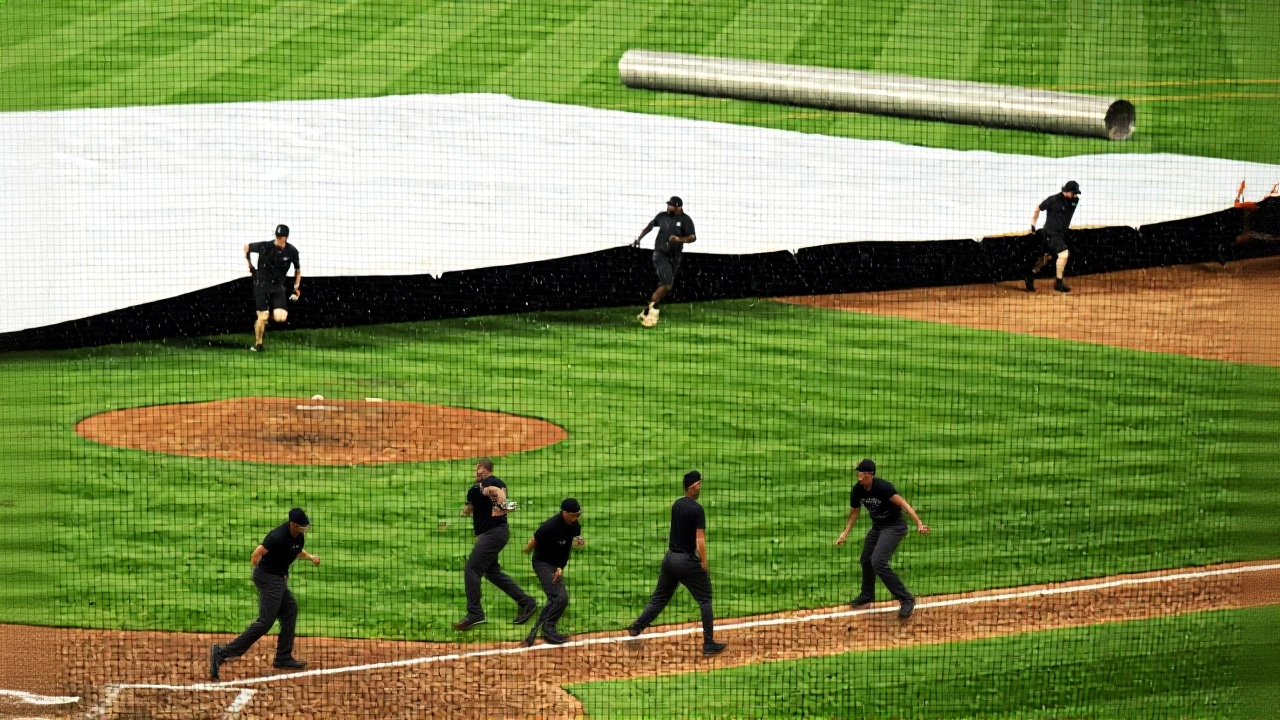
It’s not often that the unpredictable spring weather in Denver puts a wrench in Major League Baseball plans, but on Sunday, May 17, 2026, it did exactly that. The rubber match between the Colorado Rockies and the Arizona Diamondbacks was forced into a significant rain delay due to looming thunderstorms over Coors Field. For fans who had braved the afternoon chill for the decisive game of the three-game series, the wait was tense. But here’s the good news: the game wasn’t postponed. It just got pushed back.
The original first pitch was scheduled for 1:10 p.m. local Mountain Time (3:10 p.m. ET). As clouds gathered and the sky darkened, officials made the call to suspend play before it even began. According to updates from the Rockies’ official social media channels, the game would officially resume at 2:55 p.m. local time. That’s a nearly two-hour delay, turning what should have been a standard afternoon matchup into an evening affair under the lights.
The Weather Battle at Mile High
Why the long wait? Denver’s weather is notorious for its sudden shifts, especially in late spring. AccuWeather forecasts indicated a high probability of precipitation throughout the afternoon. At 2 p.m. MT, the chance of rain sat at 64%, climbing to 66% by 3 p.m. Even as the team waited for a break in the storms, the odds remained stubbornly high—49% at 4 p.m., spiking again to 56% at 5 p.m.
Thunderstorms were expected to move through the area in waves. The forecast warned of severe activity over the next two hours after the initial delay, with another round hitting around 5 p.m. local time. In between these bursts, cloudy skies and strong chances of precipitation kept the grounds crew on edge. They couldn’t risk playing on a wet field, nor could they guarantee player safety if lightning struck nearby. It’s a delicate balance, and today, patience won out.
"This was a long delay, with significant inclement weather moving through the area," noted reports from the scene. "But both teams are no doubt happy to avoid a postponement." A full postponement means making up the game later, often as part of a doubleheader—a nightmare for pitchers and schedules alike. Avoiding that outcome was a small victory for everyone involved.
Impact on the Series Decider
This wasn’t just any regular-season game. It was the rubber match—the final contest of a three-game set. Whoever wins this one takes the series. That adds a layer of intensity that doesn’t always translate to TV ratings but certainly matters to the players. Imagine being a pitcher, mentally preparing for a 1:10 p.m. start, only to sit in the dugout for two hours waiting for the sun to peek out.
The delay likely affected warm-up routines and mental focus. Pitchers rely on rhythm; hitters rely on timing. When you interrupt that flow with a lengthy stoppage, adjustments become necessary. Yet, professional athletes are built for adaptability. By 2:55 p.m., when the all-clear signal finally came, both squads were ready to go.
Sports Illustrated confirmed the timeline, noting that the game “has begun in a delay” according to the Rockies. The update via X (formerly Twitter) clarified the new start time: 2:55 p.m. Denver time, which translates to 1:55 p.m. for viewers in Arizona. This time zone difference is crucial for national broadcasts, ensuring fans across the country know exactly when to tune in.
A History of Weather Woes?
While Coors Field is known more for its altitude than its weather issues, delays do happen. Looking back at previous seasons provides context. In May 2025, the Rockies faced a similar situation against the Detroit Tigers. A game originally scheduled for Tuesday, May 6, at 6:40 p.m. was postponed and eventually played on Thursday, May 8, as part of a traditional doubleheader. Another instance occurred in April 2025 against the Washington Nationals, where a Friday night game was moved to Sunday afternoon as the second leg of a split-doubleheader.
These examples highlight how MLB handles weather disruptions. Postponements are logged on MLB.com’s official site, while real-time updates flow through social media accounts like @Rockies. For fans, following these channels is essential. You don’t want to show up to the stadium only to find gates closed or games delayed indefinitely.
What Fans Should Know
If you’re planning to attend future games at Coors Field, keep an eye on the weather forecast. Spring and early summer in Colorado can bring sudden storms. Always check the team’s official app or website before heading out. Tickets for rained-out games are typically honored for rescheduled dates, but policies vary, so read the fine print.
For those watching from home, streaming services usually adjust their broadcast windows automatically. However, live radio coverage might require tuning into alternate frequencies if the delay extends beyond a certain point. Communication is key during these events.
Frequently Asked Questions
Was the Rockies vs. Diamondbacks game postponed?
No, the game was not postponed. It experienced a rain delay of approximately 1 hour and 45 minutes. The contest resumed at 2:55 p.m. local Mountain Time on Sunday, May 17, 2026, avoiding the need for a make-up date or doubleheader.
Why was there a delay at Coors Field?
The delay was caused by inclement weather, specifically rain and looming thunderstorms in the Denver area. AccuWeather forecasts showed a high probability of precipitation, ranging from 49% to 66% throughout the afternoon, posing safety risks for players and spectators.
When did the game actually start?
The game was originally scheduled for 1:10 p.m. local time. Due to the weather, it was delayed and officially resumed at 2:55 p.m. local Mountain Time (4:55 p.m. Eastern Time), as confirmed by the Colorado Rockies' official social media accounts.
How do I get real-time updates on MLB game delays?
The best source for real-time updates is the team's official social media channels. For the Colorado Rockies, follow @Rockies on X (Twitter). Additionally, MLB.com maintains a "Postponed Game Information" page that logs official schedule changes and delay notices.
Is this common for games at Coors Field?
While not daily occurrences, weather-related delays do happen at Coors Field, particularly in spring and early summer. Previous instances include postponed games against the Detroit Tigers and Washington Nationals in 2025, which were rescheduled as doubleheaders.